
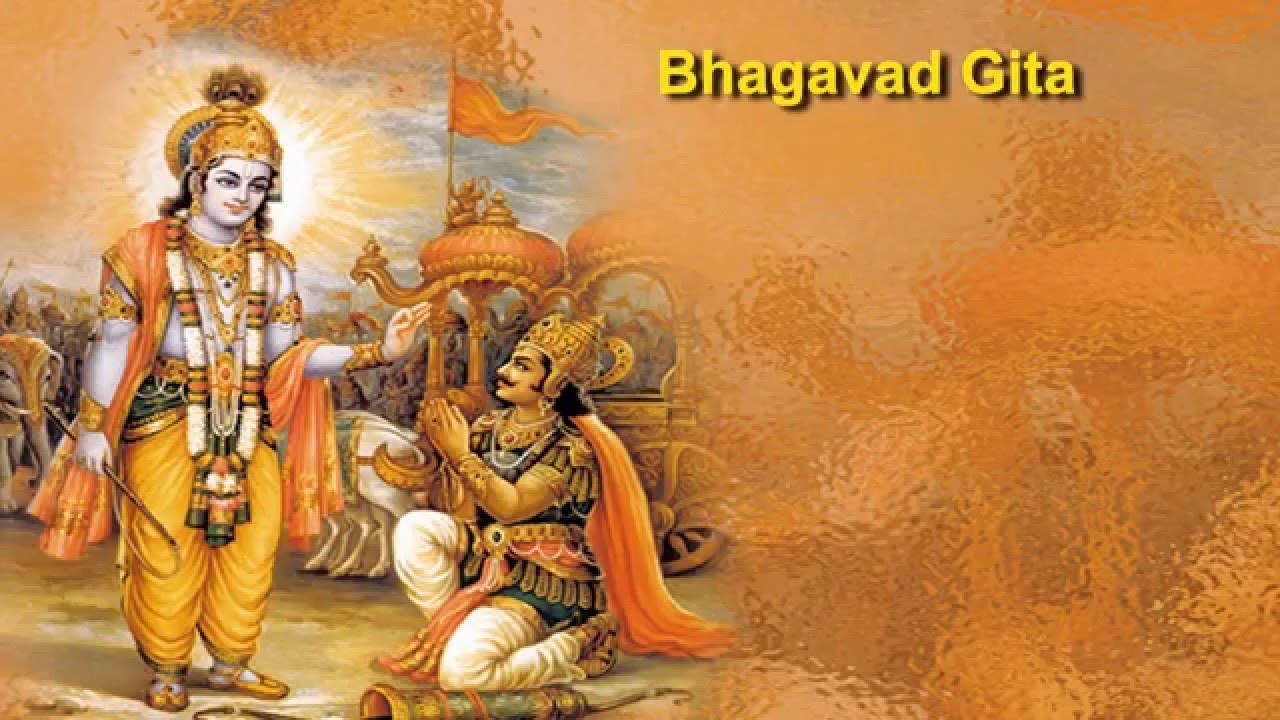
।। Shrimadbhagwad Geeta ।। A Practical Approach ।।
।। श्रीमद्भगवत गीता ।। एक व्यवहारिक सोच ।।
।। Chapter 06.29 ।I
।। अध्याय 06.29 ।।
॥ श्रीमद्भगवद्गीता ॥ 6.29॥
सर्वभूतस्थमात्मानं सर्वभूतानि चात्मनि ।
ईक्षते योगयुक्तात्मा सर्वत्र समदर्शनः ॥
“sarva-bhūta-stham ātmānaḿ,
sarva-bhūtāni cātmani..।
īkṣate yoga-yuktātmā,
sarvatra sama-darśanaḥ”..।।
भावार्थ :
योग में स्थित मनुष्य सभी प्राणीयों मे एक ही आत्मा का प्रसार देखता है और सभी प्राणीयों को उस एक ही परमात्मा में स्थित देखता है, ऎसा योगी सभी को एक समान भाव से देखने वाला होता है। (२९)
Meaning:
One who is established in yoga, one with equanimous vision everywhere, sees his self in all beings, and all beings in his own self.
Explanation:
So far, Shri Krishna was talking about the process of meditation, what should be the meditator’s approach, how should he sit and so on. But having come out of meditation, what is the vision of the perfected meditator?
Shri Krishna says that the perfected meditator sees his self in all beings, and all beings in his self. It is difficult to comprehend what this means without actually practising meditation. We can do our best to understand it through an example.
We will use the illustration of the wave and the ocean as our running example. As an individual, we have a name and a form. In the same way, we can assume that each wave in the ocean has a (fictitious) name and form. If we go with this analogy, then we can consider ourself as one of those waves.
Meditation enables us to expand the notion of what a wave is. So first, we begin to see that although there are different kinds of waves in the ocean, in essence, they are nothing but name and form. Some waves are big, some are small. Some last for a few seconds, some last for much longer than that. Now I could be a small wave and you could be a big wave, but both of us are waves, nevertheless. It is akin to realizing that we are all in the same family, company, nation and so on.
This stage of the perfected meditator’s vision is indicated by the words “he sees his self in all beings”.
As we further expand our vision, we begin to unravel the base of all these waves. We think: yes, all of us are waves, but what holds us together? We then realize that all waves no matter how big or small are contained in the ocean. The ocean is infinitely larger than all of the waves put together. None of the waves can exist without the ocean.
The final stage of this vision is reached when we as the wave realize that the ocean also is a name and form, even though it is infinitely larger than all of the waves put together. At its essence, it is nothing but water. I am the wave is water, other waves are water, the ocean is also water.
This state is indicated by the words “he sees all beings in his own self”, and such a person is called “sarvatra samadarshanaha”, one with equal vision. Yōgayuktātmā; is the name of this jñāni; ātma means the mind; jñāni whose mind is yuktaḥ; yuktaḥ means disciplined or saturated with this knowledge. So, with whatever field of knowledge the mind is saturated with, the mind will naturally think of that. If you are a musician dedicated to music, wherever you go, your mind will musically think; even when the baby cries, you will interpret in terms of music; sa ma pa da ni sa, it is crying, you will say that even in crying in svara. Why, you have dedicated your life.
And therefore, yuktaḥ means saturated with the self-knowledge; because of what, yōgēna; because of the consistent practice of nidhidhyāsanam; by giving quality time to the thought of Vēdānta. Therefore yōga means nidhidhyāsanam; yuktaḥ means saturation; ātma means mind; yōga yukta ātma means the one whose mind has reached Vēdāntic saturation through Vēdāntic mediation. And such a person, sarvatra samadarśanaḥ; because he is used to dwelling upon ātma all the time; even when he interacts with the people, he does not lose sight of the ātma in everyone; the essential nature in everyone.
Therefore, sarvatra sama samadarśanaḥ means sarvatra ātma darśanaḥ. And it does not mean that he does not see differences; certainly he sees physically differences; certainly he sees the intellectual and emotional differences; but in and through the differences, he does not lose sight of the oneness of ātma.
Another point made in this shloka is that this “seeing” does not happen just with one’s eyes. This vision comes out of wisdom. Such vision is sometimes referred to as the “third eye”. This is the vision of a “sthitaprajnya” that was briefly discussed in the second chapter.
The ingredient of everything that exists is God himself, in the form of his various energies as stated in Nārad Pañcharātra [v22]
“Just as the sun, while remaining in one place, spreads its light everywhere, similarly the Supreme Lord, by his various energies pervades and sustains everything that exists.” The perfected yogis, in the light of realized knowledge, see everything in its connection with God.
This topic is further elaborated upon in the next few shlokas.
।। हिंदी समीक्षा ।।
सच्चिदानंद, निर्गुणकार ब्रह्म जिस में अभिन्न भाव से स्थित, वही योगायुक्तात्मा है। इसी को ब्रह्मात्मैक्य-दृष्टि मानते हुए, ध्यान योग के उच्चतम स्तर पर पहुचे योगी ब्रह्मस्वरूप होने से मैं शब्द से अभिव्यक्ति की गई कि मैं सर्वत्र व्याप्त हूँ, मैं ही सभी प्राणियों में समाया हूँ। जो अद्वैत भाव मे समस्त संसार का विच्छेद करा देने वाला ब्रह्म के साथ एकता का देखता है वह समाहित अन्तःकरण से युक्त और सब जगह समदृष्टिवाला योगी है। जिस का ब्रह्म और आत्मा की एकता को विषय करने वाला ज्ञान ब्रह्मा से लेकर स्थावर पर्यन्त समस्त विभक्त प्राणियों में भेदभाव से रहित सम हो चुका है ऐसा पुरुष अपने आत्मा को सब भूतों में स्थित देखता है, अर्थात् ब्रह्मा से लेकर स्तम्ब पर्यन्त समस्त प्राणियों को आत्मा में एकत्व को प्राप्त हुए देखता है।
ईश्वर तत्व सभी भूतो के हृदय में घुसा हुआ है, वहां से वह बैठा बैठा अपनी माया से सभी यंत्रारुढ़ भूतो को घुमाता रहता है। सर्वभूतानि से अभिप्राय सभी के हृदय में बैठे उस विज्ञानमय ईश्वर से जो विकार से युक्त हो कर इस संसार को चला रहा है, किंतु विकार उस का स्वरूप नही है। इसलिए ईश्वर ही माया के द्वारा सभी जीवों की प्रवृति को विकृत कर देता है। इसलिए जो इस तथ्य को समझ जाता है, वह सभी भूतो में माया से विकृत विकार के माया जाल में नही फस कर, उस ईश्वर के स्वरूप को देखता है। इसलिए उस योगी पुरुष पर माया से विज्ञानमय अज्ञान का पर्दा नष्ट हो जाता है, और सभी में वह एक ही ईश्वर को विभिन्न प्रकार की देह और स्वभाव में देख पाता है।
जैसे मनुष्य खाँड़ से बने हुए अनेक तरह के खिलौनों के नाम रूप आकृति आदि भिन्नभिन्न होने पर भी उन में समान रूप से एक खाँड़ को, लोहे से बने हुए अनेक तरह के अस्त्र शस्त्रों में एक लोहे को, मिट्टी से बने हुए अनेक तरह के बर्तनों में एक मिट्टी को और सोने से बने हुए आभूषणों में एक सोने को ही देखता है ऐसे ही ध्यानयोगी तरह तरह की वस्तु व्यक्ति आदि में समरूप से एक अपने स्वरूप को ही देखता है।
कर्मयोगी, सांख्य योगी और ध्यान योगी सभी को सर्वभूतात्मैक्य – ज्ञान की प्राप्ति यही बताती है कि अद्वैत भाव के पूर्ण ज्ञान में योगी में विभेद दृष्टि नही रहती, वह सभी प्राणियों, वस्तु एवम कार्यो में परब्रह्म को ही देखता है, इसलिये समभाव रहता है।
जिस ने अनेकता में एक सत्य का दर्शन कर लिया वही आत्मज्ञानी पुरुष सर्वत्र समदृष्टि से ब्राह्मण गाय हाथी श्वान और चाण्डाल को देख सकता है।
विभेद दृष्टि से ईर्षा, घृणा, छल, कपट, प्रेम, दया आदि भाव उत्पन्न होते है किंतु जब दो है ही नही तो यह भाव नही होते। अंतर अपने अंदर से भाव से है, वस्तु, व्यक्ति, जीव और उन के प्रकार या आचरण का नही है।
हिन्दू धर्म में ही केवल मात्र ऐसा कोई आत्मानुभवी पुरुष नहीं है जिस ने दैवी करुणा से ही क्यों न हो ‘हे पापपुत्र’ जैसे अशोभनीय सम्बोधन द्वारा किसी को सम्बोधित किया हो। स्वामी रामतीर्थ के समान हिन्दू महात्मा पुरुष ने लोगों को हे अमृत के पुत्रों के अतिरिक्त किसी अन्य शब्द से संबोधित नहीं किया। अहं ब्रह्मास्मि का अनुभव ही पूर्णत्व का द्योतक है जिसे ऋषियों ने सदैव अपना लक्ष्य बनाया है। इसी अनुभव को इस श्लोक में अत्यन्त प्रभावशाली ढंग से दर्शाया गया है। गीता के प्राय सभी अध्यायों में इस सिद्धान्त का प्रतिपादन किया गया है कि नाम रूप मय यह सृष्टि पारमार्थिक सत्य की अभिव्यक्ति है अथवा यह सृष्टि उस सत्य पर अध्यस्त (कल्पित) है। इस दृष्टि से सम्पूर्ण नाम रूपों का अधिष्ठान यह देशकालातीत आत्मतत्व ही है।
भगवान् श्रीकृष्ण स्पष्ट घोषणा करते हैं कि केवल वह पुरुष आत्मज्ञानी या ईश्वर का साक्षात्कारकर्ता नहीं कहा जा सकता जिसने मात्र स्वयं को ही शुद्ध दिव्य स्वरूप में अनुभव किया हो। वह पुरुष जिसने कि सम्पूर्ण भूतों में विराजमान एक ही आत्मतत्त्व के दर्शन किये हों आत्मज्ञानी कहा जायेगा। अपने हृदय में स्थित चैतन्य आत्मा ही सर्वत्र सभी नाम रूपों में स्थित है और यही चैतन्य सम्पूर्ण दृश्यमान जगत् का अधिष्ठान है। अत हृदयस्थ चैतन्य के अनुभव का अर्थ ही सर्वत्र व्याप्त नित्य तत्व को अनुभव करना है।
सांख्य योग में तत्वदर्शी योगी, कर्म योग में ज्ञान कर्मयोग सन्यास एवम ज्ञान योग में ब्रह्मसंस्थ अब ध्यान योग एकत्व भाव मे हम योग की पराकाष्ठा में एक ही समान रूप को पढ़ रहे है। शब्दो से समत्व या स्थितप्रज्ञ को व्यक्त नही किया जा सकता क्योंकि यह मात्र और केवल मात्र अनुभव से स्वयं प्राप्त करना योग्य अनुभव है। जिस स्थिति को हम नही जानते और सिर्फ पढ़ते है तो उस के प्रति कभी व्यवहारिक होने की शंका भी करते है। विज्ञान की उन्नति देख कर समझ सकते कि आज से 50-100 साल पहले जो कल्पना लगती थी वो आज उन एकनिष्ठ वैज्ञानिकों के कठिन परिश्रम का परिणाम है। वैसे ही अध्यात्म भी उन महान ऋषियों की देन है जिन्हों ने जीवन को हजारों साल पहले जीने की नियम बना कर विभिन्न ग्रंथो में हमे दिए। वो नियम आज भी सत्य है एवम संसार के हर महान व्यक्ति द्वारा उन्ही नियमो को दोहराया जाता है। ज्ञान, कर्म एवम ध्यान पढ़ने या सुनने सुनाने की वस्तु का हो कर प्रत्यक्ष अनुभव करने का मार्ग है।
समदर्शन अर्थात सभी में स्वयं को और स्वयं में सभी को देखना योगी का कार्य है, किंतु इस का अर्थ यह कदाचित नही है कि वह यदि मूल तत्व को जानता है तो बाहरी तत्व अर्थात प्रकृति से अनभिज्ञ है। सभी भूतो के हृदय में जो ईश्वर है, वह विज्ञानमय अर्थात माया के साथ है, इसलिए सभी का आचरण, व्यवहार, क्रियाएं, कामनाएं, आसक्ति, अहम पर माया का जाल है। इसलिए वह सभी में आत्मा को भी देखता है और अनात्मा से प्राप्त शरीर और उस के मन के विकारों को भी देखता है। उस को भौतिक शरीर, मानसिक और भावनात्मक शरीर सभी दिखते है। वह अध्यात्म में सभी में आत्मा को देखता हुए कोई दुर्भावना या विकार नहीं रखता और निष्काम और निर्लिप्त कर्मयोगी की भांति अनात्मा अर्थात भौतिक वस्तु और जीव से व्यवहार भी उसी के अनुसार करता है। प्रकृति के नित्य कर्म, भूख, प्यास, सोना या अन्य कर्म सामान्य जीव के अनुसार ही होते है किंतु उसे जो असीम आनंद आत्मा को जानने का, वही से वह अपने नित्य आनंद को प्राप्त करता है।
सगुण साकार का ध्यान करने वाले योगी एवम उस के अनुभवों के बारे में अब आगे पढ़ते है।
।। हरि ॐ तत सत ।। 6.29।।
Complied by: CA R K Ganeriwala ( +91 9422310075)