
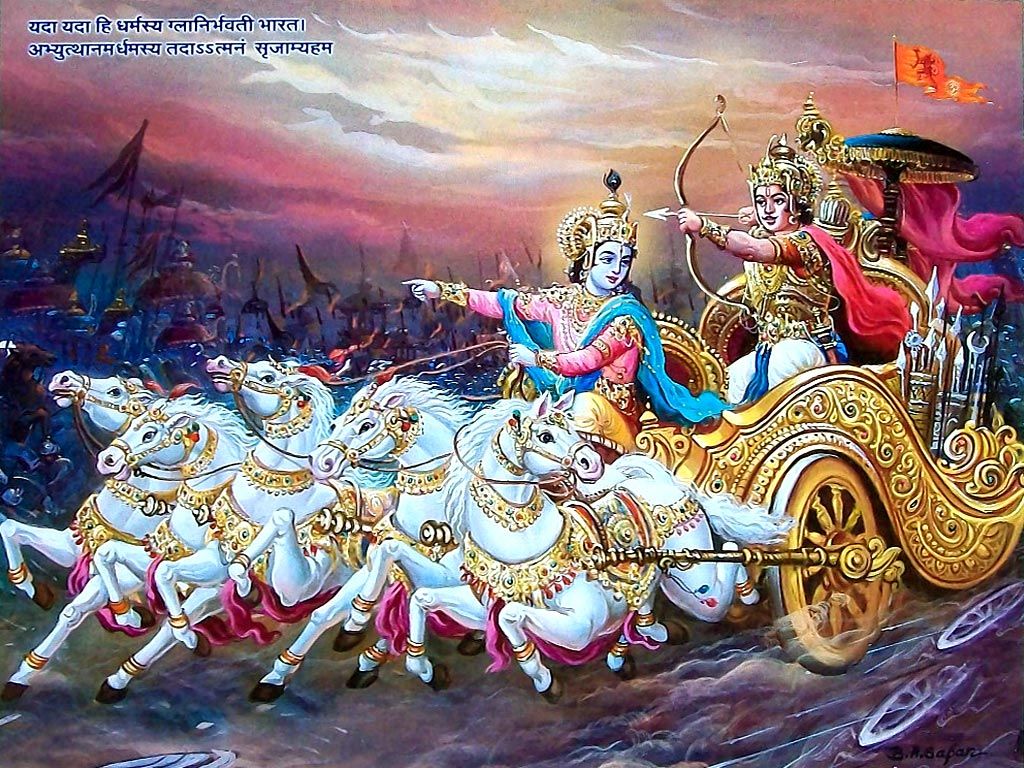
।। Shrimadbhagwad Geeta ।। A Practical Approach ।।
।। श्रीमद्भगवत गीता ।। एक व्यवहारिक सोच ।।
।। Chapter 06.16 ।।
।। अध्याय 06.16 ।।
॥ श्रीमद्भगवद्गीता ॥ 6.16॥
नात्यश्नतस्तु योगोऽस्ति न चैकान्तमनश्नतः ।
न चाति स्वप्नशीलस्य जाग्रतो नैव चार्जुन॥
“nāty-aśnatas ‘tu yogo ‘sti,
na caikāntam anaśnataḥ..।
na cāti-svapna-śīlasya,
jāgrato naiva cārjuna”..।।
भावार्थ :
हे अर्जुन! योग में स्थित मनुष्य को न तो अधिक भोजन करना चाहिये और न ही कम भोजन करना चाहिये, न ही अधिक सोना चाहिये और न ही सदा जागते रहना चाहिये। (१६)
Meaning:
This yoga is not for one who overeats nor for one who fasts, it is not for one who oversleeps nor for one who never sleeps, O Arjuna.
Explanation:
The Īśhopaniṣhad states: “Those who cultivate only material science go to hell. But those who cultivate only spiritual science go to an even darker hell.” Material science is necessary for the maintenance of our body, while spiritual science is necessary for the manifestation of the internal divinity within us. We must balance both in our lives to reach the goal of life. Hence, yogāsans, prāṇāyām, and the science of proper diet are an essential part of Vedic knowledge. Each of the four Vedas has its associate Veda for material knowledge. The associate Veda of Atharva Veda is Ayurveda, which is the hoary science of medicine and good health. This demonstrates that the Vedas lay emphasis on the maintenance of physical health.
When we begin to think that we are progressing in meditation, we may begin to impose severe hardships on the body just because we have seen some others do it. Shri Krishna, in this shloka and the next one, dispels many of these misconceptions. Alternately, we may go in the other direction and begin to neglect the body. In this regard, he advocates a balanced and moderate lifestyle towards achieving our spiritual goals.
First let us examine the imposition of severe hardships on the body. Shri Krishna says that meditation will not be easy for one who constantly deprives his body of food and sleep. If the body is deprived of food for a long period of time, where will the mind go when we sit in meditation? It will go to food. The same thing will happen if we forcibly deprive the body of sleep. The minute we close our eyes to meditate, sleep will take over the body. Such hardships become obstacles in meditation.
Before the Buddha achieved enlightenment, he went through a phase where he deprived his body of food. When his body began to look like a skeleton, and when he realized that he was almost about to die of starvation, he came to the conclusion that such severe hardships do not in any way accelerate the process of enlightenment. One cannot torture the very instrument that one uses to attain liberation. Like a perfectly tuned musical instrument, the strings should not be too loose or too tightly wound.
The other extreme is living life improperly by overeating and oversleeping. Besides the health problems associated with overeating, the additional strain put on the digestive system will draw the mind’s attention away from meditation. Where meditation aims to negate association with the body, overeating pulls the meditator back to the body. Also, oversleeping makes the body dull and taamasic. Instead of meditation uplifting the meditator to a higher level of sattva, oversleeping will also pull the meditator down.
So therefore, any deviation from treating the body with care and moderation is not just an obstacle in the spiritual path, it also is an obstacle in any worldly activities. Shri Shankaraachaarya provides a simple formula for moderating our eating habits. He says that one should have a sense of how big one’s appetite is, and then divide it into four parts. Two parts of that appetite should be filled with solid food, one part with liquid and one part should be left empty.
।। हिंदी समीक्षा ।।
उपर्युक्त साधन और साध्य का विस्तृत विवरण जानकर यदि कोई व्यक्ति निर्दिष्ट साध्य की प्राप्ति में स्वयं को असमर्थ पाये तो कोई आश्चर्य नहीं । ऐसा भी नहीं कि साधक में इच्छा या प्रयत्न का अभाव हो फिर भी लक्ष्य प्राप्त करना उसे कठिन ही प्रतीत होता है। वह क्या कारण है जो अनजाने ही साधक को अपने साध्य से दूर ले जाता है कोई भी वैज्ञानिक सिद्धांत प्रयोग में सफलता के लिए सावधानियों को बताये बिना पूर्ण नहीं होता। अगले कुछ श्लोकों में ध्यानयोग के मार्ग में आने वाले सम्भावित गर्तों का संकेत किया गया है जिनसे साधक को बचने का प्रयत्न करना चाहिए। ध्यान की सफलता के लिए महत्त्व का नियम यह है कि अति सर्वत्र वर्जयेत् अर्थात् जीवन के कार्यों और उपभोगो में अतिरेक का त्याग करना चाहिए। परिमितता या संयम सफलता की कुन्जी है। असंयम से विक्षेप उत्पन्न होते हैं और संगठित व्यक्तित्व का सांमजस्य भंग हो जाता है। इसलिए आहार विहार और निद्रा में परिमितता का होना आवश्यक है।भगवान् कहते हैं कि अत्याधिक मात्रा में भोजन करने वाले या अति उपवास करने वाले व्यक्ति के लिए योग असाध्य है।
यहाँ खाने का अर्थ केवल मुख के द्वारा अन्न भक्षण ही नहीं वरन् सभी इन्द्रियों के द्वारा किये जाने वाले विषय ग्रहण है। इस शब्द में समाविष्ट हैं विषय ग्रहण मन की भावनाएँ और बुद्धि के विचार।
संक्षेप में योगाभ्यासी पुरुष के लिए नियम यह होना चाहिए कि केवल व्यक्तिगत लाभ के लिए प्राणी जगत् का संहार किये बिना समय समय पर जो कुछ प्राप्त होता है उस का ग्रहण या भक्षण केवल इतना ही करे कि पेट को भार न हो। यहाँ ठीक ही कहा गया है कि अत्याधिक निद्रा अथवा जागरण योग के अनुकूल नहीं है। यहाँ भी विवेकपूर्ण परिमितता ही नियम होना चाहिए।
महात्मा बुद्ध जब मोक्ष के लिये घर त्याग कर निकल गए थे तो शरीर को साधने के लिए अत्यंत तप करते वक्त भी कोई सफलता नहीं मिली। तभी उन्होंने एक स्वर सुना कि वीणा के तार कसने से संगीत मधुर बजता है किंतु इतना भी नही कसना चाहिये कि तार टूट जाये। ठीक उसी प्रकार खाने और सोने के लिए यह श्लोक कहा गया है। अब योगी के आहार आदि के नियम कहे जाते हैं अधिक खानेवाले का अर्थात् अपनी शक्ति का उल्लङ्घन कर के शक्ति से अधिक भोजन करने वाला का योग सिद्ध नहीं होता और बिल्कुल न खाने वाले का भी योग सिद्ध नहीं होता क्योंकि यह श्रुति है कि जो अपने शरीर की शक्ति के अनुसार अन्न खाया जाता है वह रक्षा करता है वह कष्ट नहीं देता ( बिगाड़ नहीं करता ) जो उस से अधिक होता है वह कष्ट देता है और जो प्रमाण से कम होता है वह रक्षा नहीं करता। इसलिये योगी को चाहिये कि अपने लिये जितना उपयुक्त हो उस से कम या ज्यादा अन्न न खाय। अथवा यह अर्थ समझो कि योगी के लिये योगशास्त्र में बतलाया हुआ जो अन्न का परिमाण है उस से अधिक खाने वाले का योग सिद्ध नहीं होता। वहाँ यह परिमाण बतलाया है कि पेट का आधा भाग अर्थात् दो हिस्से तो शाकपात आदि व्यञ्जनों सहित भोजन से और तीसरा हिस्सा जल से पूर्ण करना चाहिये तथा चौथा वायु के आने जाने के लिये खाली रखना चाहिये इत्यादि। भगवान कहते है कि हे अर्जुन न तो बहुत सोने वाले का ही योग सिद्ध होता है और न अधिक जागने वाले को ही योगसिद्धि प्राप्त होती है।
परिमाण का आधार तो बता भी दिया तो भी आधा भाग की भोजन किया है, इसे कैसे जाने। वास्तव में भोजन आधा भाग या परिपूर्ण तभी मान लेना चाहिए, जब खाने के बाद निंद्रा, गैस या डकार आदि न हो एवम अपच की शिकायत न रहे। भोजन अच्छे तरीके से पकाया हुए, सही मसाले और तेल या घी युक्त हो। संतुलित आहार के अनुसार समस्त खनिज, विटामिन और प्रोटीन आदि से युक्त होना चाहिए। समय पर भोजन का भी बहुत महत्व है। देर रात्रि का भोजन नुकसान देता है और रात्रि भोजन के बाद तुरंत सोना भी।निंद्रा भी साफ और सही बिस्तर पर होने चाहिए। योगी के निंद्रा गहरी और उठने के बाद ताजगी को महसूस होना चाहिए। उतने का समय सूर्योदय से पूर्व का सही है तो शाम को जल्दी सोना भी अनिवार्य है जिसे से आवश्यकता अनुसार 5 से 7 घंटे की नींद हो सके।
वास्तव में आहार और निंद्रा स्वयं में पूरा अध्याय है। किंतु संक्षेप में हम यही कह सकते है कि योगी भी प्राकृतिक जीव है। शरीर, इंद्रियां, मन और बुद्धि प्रकृति के भाग है। यही जीव को ब्रह्म ज्ञान के साधन भी है। अतः जब तक साधन सही नही होगा, योग या ध्यान या ब्रह्म की साधना भी सही नही हो सकती।
मनुष्य का जन्म दुर्लभ है और इसी जन्म में मोक्ष की प्राप्ति का प्रयास हो सकता है। शरीर प्रकृति का ही स्थूल भाग है अतः क्षय, वृद्धि और अंत से नही मुक्त है। प्रकृति के भाग को प्रकृति से संरक्षण होता है इसलिए पर्याप्त भोजन एवम पर्याप्त निंद्रा आवश्यक है। इन दोनों के अभाव या अति से मनुष्य मानसिक एवं शारीरिक रूप से यदि स्वस्थ नही होगा तो जब तक स्वस्थ शरीर और स्वस्थ मन नही है, वह ध्यान भी नही लगा सकता और ध्यान के लिये बताये गुणों से भी युक्त नही हो सकता। ऐसा मनुष्य आध्यात्मिक दृष्टिकोण से भी बीमार ही कहलायेगा।
अगले श्लोक में आहार-विहार से योग पर क्या प्रभाव पड़ता है, पढ़ते है।
।। हरि ॐ तत सत।। 6.16।।
Complied by: CA R K Ganeriwala ( +91 9422310075)