
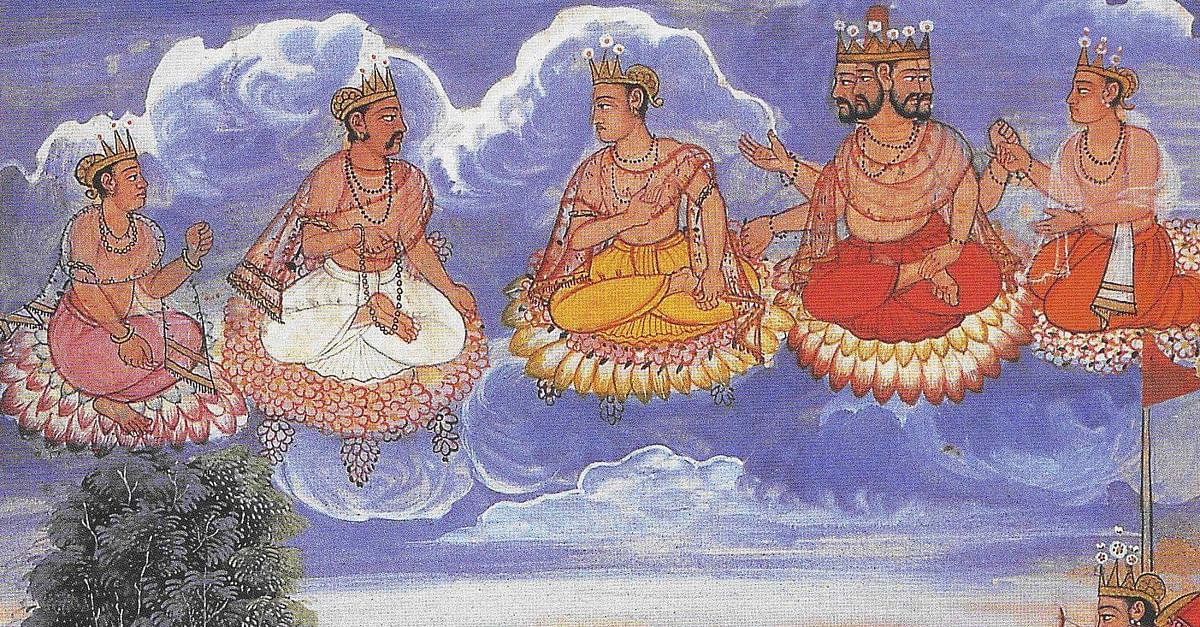
।। Shrimadbhagwad Geeta ।। A Practical Approach ।।
।। श्रीमद्भगवत गीता ।। एक व्यवहारिक सोच ।।
।। Chapter 02. 13 ।।
।। अध्याय 02. 13 ।।
॥ श्रीमद्भगवद्गीता ॥ 2.13॥
देहिनोऽस्मिन्यथा देहे कौमारं यौवनं जरा ।
तथा देहान्तरप्राप्तिर्धीरस्तत्र न मुह्यति ॥
“dehino ‘smin yathā dehe,
kaumāraḿ yauvanaḿ jarā..I
tathā dehāntara-prāptir,
dhīras tatra na muhyati”..II
भावार्थ :
जिस प्रकार जीवात्मा इस शरीर में बाल अवस्था से युवा अवस्था और वृद्ध अवस्था को निरन्तर अग्रसर होता रहता है, उसी प्रकार जीवात्मा इस शरीर की मृत्यु होने पर दूसरे शरीर में चला जाता है, ऎसे परिवर्तन से धीर मनुष्य मोह को प्राप्त नहीं होते हैं॥ १३॥
Meaning:
Just as in this body, the body dweller passes through childhood, youth and old age, so also does it obtain another body (after death); the steadfast person does not grieve over this.
Explanation:
In this body there are 4 states of experience. At physical level, what are they, kaumaram, before that, balyam, understood, childhood state; kaumaram, boyhood state, or girlhood state; yauvanam, youth and jara, means old age.
Further, in this verse, the word deha means “the body” and dehi means “possessor of the body,” or the soul. Shree Krishna draws Arjun’s attention to the fact that, since the body is constantly changing, in one lifetime itself, the soul passes through many bodies. Similarly, at the time of death, it passes into another body. Actually, what we term as “death” in worldly parlance is merely the soul discarding its old dysfunctional body, and what we call “birth” is the soul taking on a new body elsewhere. This is the principle of reincarnation. Most Oriental philosophies accept this concept of reincarnation.
It is our experience that we pass through childhood, youth and old age. We can agree that this concept is familiar to us. But note the language used in the first line. It is not you or I that passes through these phases, it is something called the “dehina” or the “body dweller”. The body is born, it undergoes changes, and eventually perishes. But the body dweller remains constant through these changes. So, this means that the body dweller is something that is separate, distinct and different from the body.
Remember the example of Mr. X and his car from the first verse? Let’s revisit it. Mr. X is excited when his car is brand new. After 5-6 years, it starts to develop engine problems. After another 4-5 years, the problems have become so bad that Mr. X decides to sell this car and buy a new Mercedes S-class. Mr. X can be called a “car dweller”.
As the old car’s engine degraded over the years, Mr. X remained the same from the car’s perspective. But when the car had lived its life, he discarded that car for another new car. And there was nothing to be sad about this point. An extreme scenario is some unscrupulous people deliberately crash their old car just so that they can get insurance money to buy a new one.
Another example It is like demolishing the old building and building a new one. Flat systems are coming. All independent houses are pulled down and converted into flats. Even though they all change, the enclosed space, no body demolished. That space is eternal, the walls appear and disappear. Similarly, the consciousness is like space, is the caitanyam, the body wall appears, the body wall is demolished. Therefore, Krishna says, tatha dehantaraprapti. Similar is the acquisition of another body.
Similarly, our body undergoes modifications of birth and aging, and eventually perishes. But the body dweller remains constant through these modifications. When the old body has become unfit to dwell in, the body dweller discards it and obtains a new body. The key point here is that the body dweller remains constant through the changes in its body, and also through the change from one body to another. And just like in the car example, a wise person should not grieve about growing old or dying, because the body dweller will always remain constant.
The body dweller is, therefore, the eternal essence that was highlighted in the prior verse. And since it is different than the physical body which perishes, it cannot be “found” in any part of the physical body.
So what exactly is this body dweller, this eternal essence? And how should we acquire the wisdom to see this eternal essence?
Footnotes
1. In one day we have several thoughts such as “I am happy”, “I am sad”, we join a condition to our “I”. Each time do so, we are “born” as a happy person, as a sad person and so on, even if there is no new physical body that is born.
।। हिंदी समीक्षा ।।
जिस का देह है वह देही है उस देही की अर्थात् शरीरधारी आत्मा की इस वर्तमान शरीर में जैसे कौमार्य, बाल्यावस्था यौवनतरुणावस्था और जरा वृद्धावस्था ये परस्पर विलक्षण चार अवस्थाएँ होती हैं।
इन में पहली अवस्था के नाश से आत्म का नाश नहीं होता और दूसरी अवस्था की उत्पत्ति से आत्मा की उत्पत्ति नहीं होती तो फिर क्या होता है कि निर्विकार आत्मा को ही दूसरी, तीसरी और चौथी अवस्था की प्राप्ति होती हुई देखी गयी है।
वैसे ही निर्विकार आत्मा को ही देहान्तर की प्राप्ति अर्थात् इस शरीर से दूसरे शरीर का नाम देहान्तर है। इसी को पुन: जन्म के सिद्धांत के रूप में लगभग सभी दर्शन शास्त्र में स्वीकार भी किया गया है।
स्मृति का यह नियम है कि अनुभवकर्त्ता तथा स्मरणकर्त्ता एक ही व्यक्ति होना चाहिये तभी किसी वस्तु का स्मरण करना संभव है। मैं आप के अनुभवों का स्मरण नहीं कर सकता और न आप मेरे अनुभवों का परन्तु हम दोनों अपने अपने अनुभवों का स्मरण कर सकते हैं।
वृद्धावस्था में हम अपने बाल्यकाल और यौवन काल का स्मरण कर सकते हैं। कौमार्य अवस्था के समाप्त होने पर बाल्यावस्था, फिर युवावस्था आती है और तत्पश्चात् वृद्धावस्था। अब यह तो स्पष्ट है कि वृद्धावस्था में व्यक्ति के साथ कौमार्य और युवा दोनों ही अवस्थायें नहीं हैं फिर भी वह उन अवस्थाओं में प्राप्त अनुभवों को स्मरण कर सकता है। स्मृति के नियम से यह सिद्ध हो जाता है कि व्यक्ति में कुछ है जो तीनों अवस्थाओं में अपरिवर्तनशील है जो बालक और युवा शरीर द्वारा अनुभवों को प्राप्त करता है तथा उनका स्मरण भी करता है। इन सभी अवस्था को स्मरण करने वाला एक ही जीव होता है। विज्ञान भी कहता है कि हमारे सैंकड़ों सेल या कोश प्रतिक्षण बदलते रहते है। लगभग 7 वर्षो में सभी कोश बदल जाते है।
इस प्रकार देखने पर यह ज्ञात होता है कि कौमार्य अवस्था की मृत्यु बाल्यावस्था है और बाल्यावस्था की मृत्यु युवावस्था का जन्म है और युवावस्था की मृत्यु ही वृद्धावस्था का जन्म है वृद्धावस्था की मृत्यु पुनः जन्म है और फिर भी निरन्तर होने वाले इन परिवर्तनों से हमें किसी प्रकार का शोक नहीं होता बल्कि इन अवस्थाओं से गुजरते हुये असंख्य अनुभवों को प्राप्त कर हम प्रसन्न ही होते हैं।
जगत् में प्रत्येक व्यक्ति के इस निजी अनुभव का दृष्टान्त के रूप में उपयोग करके श्रीकृष्ण अर्जुन को यह समझाना चाहते हैं कि बुद्धिमान पुरुष जीवात्मा के एक देह को छोड़कर अन्य शरीर में प्रवेश करने पर शोक नहीं करता।
पुनर्जन्म के सिद्धान्त के पीछे छिपे इस सत्य को यह श्लोक और अधिक दृढ़ करता है। अत बुद्धिमान पुरुष के लिये मृत्यु का कोई भय नहीं रह जाता।
बाल्यावस्था आदि की मृत्यु होने पर हम शोक नहीं करते क्योंकि हम जानते हैं कि हमारा अस्तित्व बना रहता है और हम पूर्व अवस्था से उच्च अवस्था को प्राप्त कर रहे हैं। उसी प्रकार एक देह विशेष को त्याग कर जीवात्मा अपनी पूर्व वासनाओं के अनुसार अन्य देह को धारण करता है। इस विषय में धीर पुरुष मोहित नहीं होता है।
भगवान कृष्ण ने यह वचन सुननेवाले अर्जुन को शरीर के बदलते स्वरूप को उदाहरण देते हुए आत्मा के अजर अमर होने के साथ जोड़ा। जिसे हम चाहे तो व्यक्ति द्वारा एक नई कार लेने और उस को चलाने से जोड़ सकते है कुछ समय बाद कार यदि पुरानी हो जाये तो उस कार को बेच कर नई कार ले ली जाती है। कार का आनंद लेने वाला व्यक्ति वो ही रहता है। अतः परिवर्तनशील शरीर है इस मे स्थित व्यक्ति नही।बचपन, निंद्रा, यौवन से बुढ़ापे तक वो ही व्यक्ति है वो जन्म से पूर्व भी था और जन्म के बाद भी रहेगा। कभी सोचिए कि गीता पढ़ने या मोबाइल चलाने, आफिस जाने से ले कर घर, बाहर, आफिस, सिनेमा आदि में अलग अलग अनुभव एवम व्यक्तित्व में प्रकट करता व्यक्तित्व क्या यह शरीर है या शरीर मे उपस्थित कोई एक जिस को हम अक्सर “मै” कहते है।
शंकराचार्य जी शरीर को अन्नमय कोश कहते है, जिस का निर्माण अन्न से है। इसलिये यह जन्म, विकसित एवम क्षय को भी प्राप्त होता है। किंतु ज्ञानी लोग जानते है कि यह अन्नमय शरीर वह नही है। आत्मा एवम शरीर का सम्बंध क्या है। इस को सूक्ष्म व स्थूल शरीरों का संयोग कहा गया है।
वस्तुतः कृष्ण अर्जुन को समझाने का प्रयत्न कर रहे कि मिथ्या के आश्रय रह कर सत्य को नही जाना जा सकता, मिथ्या को जानने के लिये सत्य का आश्रय लेना पड़ता है। देह को सत्य समझ कर आत्मा के नित्य होने का ज्ञान नही हो सकता। गलत तथ्यों और विचारो पर आधारित ज्ञान भी अज्ञान ही है, इसलिए ज्ञान के अपने अज्ञान को समझना और उस से मुक्त होना भी ज्ञान है।
भगवान श्री कृष्ण ने अर्जुन के ज्ञान के क्षेत्र में अपने विचार रख कर अर्जुन की निराशा में अधिक जानने की इच्छा को जाग्रत करने का प्रयास शुरू किया है। श्रोता जब तक सुनने को उत्साहित नही होता, ज्ञान देना व्यर्थ है। उस दशा में और भी ज्यादा जब पुस्तक ज्ञान श्रोता का अधिक हो क्योंकि उसे अपने ज्ञान के अहम का मतिभ्रम रहता है।
।। हरि ॐ तत सत ।। 2.13 ।।
Complied by: CA R K Ganeriwala ( +91 9422310075)