
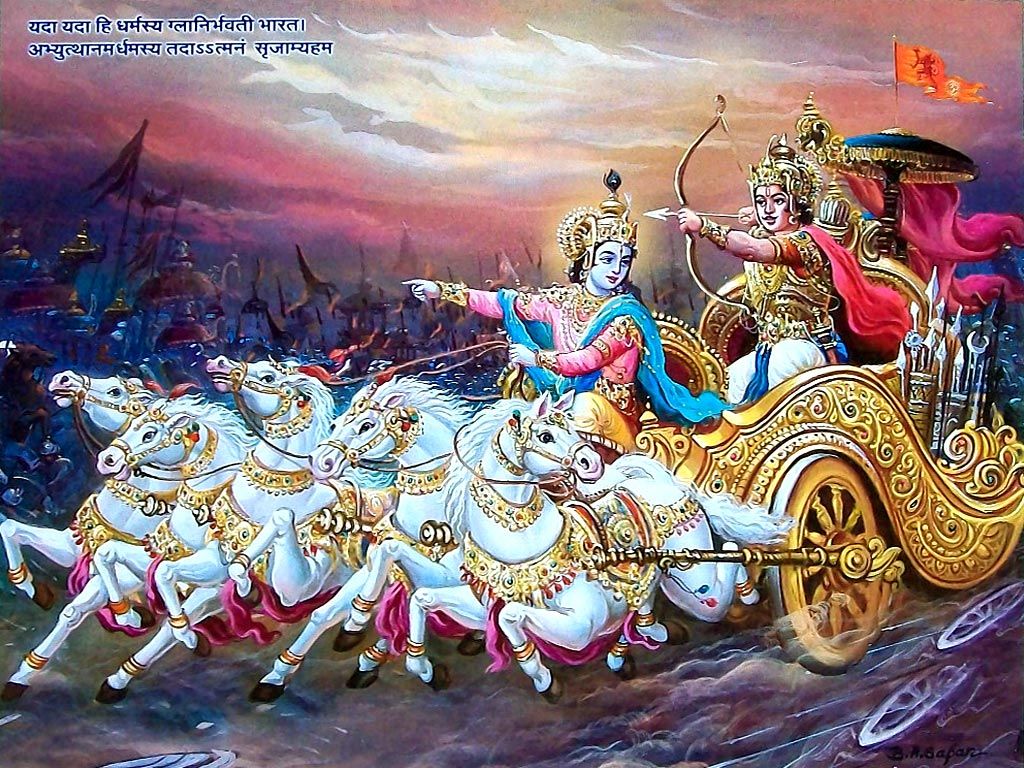
।। Shrimadbhagwad Geeta ।। A Practical Approach ।।
।। श्रीमद्भगवत गीता ।। एक व्यवहारिक सोच ।।
।। Chapter 09.04 II
।। अध्याय 09.04 II
॥ श्रीमद्भगवद्गीता ॥ 9.4॥
मया ततमिदं सर्वं जगदव्यक्तमूर्तिना ।
मत्स्थानि सर्वभूतानि न चाहं तेषवस्थितः ॥
“mayā tatam idaḿ sarvaḿ,
jagad avyakta- mūrtinā..।
mat- sthāni sarva- bhūtāni na,
cāhaḿ teṣv avasthitaḥ”..।।
भावार्थ:
मेरे कारण ही यह सारा संसार दिखाई देता है और मैं ही इस सम्पूर्ण-जगत में अदृश्य शक्ति-रूप में सभी जगह स्थित हूँ, सभी प्राणी मुझमें ही स्थित हैं परन्तु मैं उनमें स्थित नहीं हूँ। (४)
Meaning:
This entire universe is pervaded by my unmanifest state. All beings are based in me, I am not based in them.
Explanation:
This shloka and the next are the crux of the teaching in this chapter. Shri Krishna makes three core points: that the entire universe is pervaded by his unmanifest state, that all beings are based in him, and that he is not based in them. Let us first take a step back to understand the context of this teaching before we delve into these three points.
The Vedic philosophy does not accept the concept of God creating the world and then peeping into it from the seventh heaven to check whether His world is running all right. They repeatedly propound the theme of God being all-pervading in the world:
“There is one God; He is seated in everyone’s heart; He is also everywhere in the world.” (Śhwetāśhvatar Upaniṣhad 6.11)
“God is everywhere in theworld.”
(Īśhopaniṣhad 1)
“God pervades everything that has existed and all that will exist.” (Puruṣh
Sūktam)
Some Eastern philosophers claim that the world is a pariṇām (transformation) of God. The protagonists of pariṇām vāda state that God has transformed into the world.
Other philosophers claim that the world is vivarta (to mistake one object for another). They say that there is only God and no world; what we are seeing as the world is actually Brahman.
However, according to verses 7.4 and 7.5, the world is neither pariṇām nor vivarta. It is created from the material energy of God, called Maya śhakti. The souls too are the energy of God, but they are His superior energy, called Jīva śhakti. Therefore, the world and all the souls in it are both God’s energies and are within His personality. However, Shree Krishna also says that He does not dwell in the living beings, i.e. the infinite is not contained by the finite beings. That is because He is far more than the sum total of these two energies. Just as an ocean throws up many waves, and these waves are a part of the ocean, but the ocean is much more than the sum total of the waves, similarly too, the souls and Maya exist within the personality of God, yet He is beyond them.
The eighth chapter described meditative techniques that we had to follow throughout our lives in order to attain Ishvara, so that we can be liberated from the cycle of creation and dissolution. Now, Shri Krishna reveals a secret that will enable us to immediately gain access to Ishvara 24/7. And unlike other techniques described so far, we do not have to do any action. We just have to know.
What is this secret knowledge? Let us start with the first point. Shri Krishna says that Ishvara is present in every living and non-living being within this universe. If that’s the case, then we do not need to put in any extra effort. Once we train ourselves to view Ishvara in everything, we will gain access to him 24/7. We will not need to do any extra physical or mental activity to make that happen. But if it were that simple, why cannot we put it into practice immediately? It is because we have been preconditioned since time immemorial to see everything but Ishvara. Removing this preconditioning is the topic of the Gita.
The second point made by Shri Krishna is that all beings are based in him. Let us bring up the example of the ocean and the waves to understand this point. A five years old girl sitting on the beach will look at the waves, the foam and the ripples and conclude that they are independent things. But her mother knows that all of those shapes are created because of the ocean. Also, the girl who has to inquire about where these shapes come from. The mother does not have to do anything. She just knows that everything is nothing but water in the ocean. So, the mother will tell her, “that’s just the ocean”.
Now, let’s say the girl sees a ripple in a lake instead of the ocean. She points to it and says, “that’s the ocean”. The mother will now enhance her statement slightly by saying “that is not the ocean, that is a ripple. It is just a shape taken by water, which is in the ocean and in the lake”. Water is an abstract concept which a child slowly learns by example.
Similarly, we may begin to think that Ishvara is resident in an idol, or a saint, or a holy place. Like the ripple, they are names and forms. Even Arjuna would have found it hard to believe that Shri Krishna, who is in front of him, can pervade the entire universe. So therefore, Shri Krishna says that no visible entity can ever contain Ishvara who is beyond name and form. The true nature of Ishvara is formless. This is the third point in this shloka.
Still, a question remains. Just like we still see waves in the ocean even after knowing that they are water, we still come across thousands of names and forms every day. Many of those names and forms are people that we interact with, speak with, work with and so on. Aren’t those people “real”? How do we reconcile this? Shri Krishna addresses this confusion in the next shloka.
।। हिंदी समीक्षा ।।
इस श्लोक को समझने के लिये पहले हमें अपनी भौतिक सीमाओ को समझना पड़ेगा। ज्ञानेद्रियां का सीमित क्षेत्र है, इसलिए परमात्मा को जो लोग ज्ञानेद्रियों से प्रमाणित करने की कोशिश करते है वे असफल होते है। परमात्मा मन की भावनाओ और अनुभूति से जाना जा सकता है, इसलिए उस ने अपना निवास सभी के हृदय में बनाया। इसलिए वह सब के हृदय में रह कर भी उन में स्थित नही है।
परमात्मा शब्द के लिए सूक्ष्म, व्यक्त, अव्यक्त, सर्वव्यापी, निराकार, सर्वत्र और कण कण में व्याप्त आदि शब्दो के प्रयोग के बाद भी नेति नेति शब्द कहा गया है जिस का अर्थ है कि जिस का कोई वर्णन नहीं किया जा सकता। व्यक्त परमात्मा तीन रूप में वर्णित है, सगुण, सगुण-निगुण और अंत मे निर्गुण। जब भी हम उपासना शुरू करते है तो उस के चिंतन, मनन एवम ध्यान की आवश्यकता होती है। उपासना का आधार सात्विक एवम निष्ठा है अतः जैसी उपासना करेंगे वैसा ही फल प्राप्त होगा। चिंतन किसी भी अव्यक्त का नही हो सकता क्योंकि हमारी मन, बुद्धि एवम मनन की एक सीमा है इसलिये किसी भी व्यक्त स्वरूप से इसे शुरुवात करते है, जो मनन करते करते व्यक्त से अव्यक्त की ओर बढ़ती है, फिर ध्यान में अव्यक्त स्वरूप हो जाती है।
इसलिये जब सगुण उपासना की बात है तो परमात्मा कहते है सम्पूर्ण प्राणी मेरे में स्थित हैं अर्थात् परा अपरा प्रकृतिरूप सारा जगत् मेरे में ही स्थित है। वह मेरे को छोड़कर रह ही नहीं सकता। कारण कि सम्पूर्ण प्राणी मेरे से ही उत्पन्न होते हैं। मेरे में ही स्थित रहते हैं और मेरे में ही लीन होते हैं अर्थात् उन का उत्पत्ति, स्थिति और प्रलयरूप जो कुछ परिवर्तन होता है, वह सब मेरे में ही होता है। अतः वे सब प्राणी मेरे में स्थित हैं। अतएव ब्रह्म सत भी नही और असत भी नही, वह दूर है और समीप भी है एवम जो धर्म और अधर्म के, कृत और अकृत के या भूत एवम भव्य से परे है उसे ही ब्रह्म जानो – ब्रह्म सत्य (सत), ज्ञान (चित्त) एवम आनन्दस्वरूप है अर्थात सतचित्तानन्द स्वरूप है। इस का वर्णन जो कुछ नही किया जाता है यह उस से भी परे अवर्णनीय है।
फिर जब सगुण से निर्गुण की उपासना की बात आती है तो परमात्मा का कथन है मैं उनमें स्थित नहीं हूँ। कारण कि यदि मैं उन में स्थित होता तो उन में जो परिवर्तन होता है, वह परिवर्तन मेरे में भी होता उन का नाश होने से मेरा भी नाश होता और उनका अभाव होने से मेरा भी अभाव होता। तात्पर्य है कि उनका तो परिवर्तन, नाश और अभाव होता है परन्तु मेरे में कभी किञ्चिन्मात्र भी विकृति नहीं आती। मैं उन में सब तरह से व्याप्त रहता हुआ भी उनसे निर्लिप्त हूँ। उनसे सर्वथा सम्बन्धरहित हूँ। मैं तो निर्विकार रूप से अपने आप में ही स्थित हूँ। वास्तव में मैं उन में स्थित हूँ ।
इसलिये यह प्रकृति, माया, संसार उस व्यक्त परमात्मा का ही व्यक्त स्वरूप है जिस में परमात्मा दिखता है किंतु वह परमात्मा नही है। दर्पण में अपना स्वरूप देख कर समझ सकते है कि वो हम ही है किंतु वह स्वरूप हमारा होते हुए भी हम नही है। न तो हम दर्पण है और न ही उस मे दिखने वाला स्वरूप हम है। मीरा ने भगवान श्री कृष्ण को व्यक्त भाव मे मूर्ति में देखा और उस की उपासना में इतनी लीन हो गयी कि वो स्वयं ही कृष्ण में समा गई। मूर्ति में कृष्ण है किंतु मूर्ति कृष्ण नही। इस व्याप्त जगत में परमात्मा है किंतु परमात्मा में यह व्याप्त जगत नही। वो इस से भी आगे अव्यक्त है। यह जगत उस दिव्य स्वप्न की भांति है जिस में सब कुछ घटित होते दिखता है, अनुभव होते भी दिखता है किंतु होता नहीं है। जो स्वप्न देखता है वो जानता है कि यह असत्य है और जो स्वप्न में खो जाता है वो इस को सत्य समझ बैठता है।
अर्जुन को परमात्मा जब अपना व्यक्त स्वरूप दिखाया तो वह उस परमात्मा की माया से उत्पन्न ही माया ही थी, क्योंकि जो अत्यंत सूक्ष्म से सूक्ष्म है जो सर्व व्याप्त है वो अव्यक्त है उस को किसी भी व्यक्त स्वरूप में पूर्ण नही मान सकते।
मुझ अव्यक्त रूप परमात्मा द्वारा अर्थात् मेरा जो परम भाव है, जिस का स्वरूप प्रत्यक्ष नहीं है यानी मन, बुद्धि और इन्द्रियों का विषय नहीं है। ऐसे मुझ अव्यक्तमूर्ति द्वारा यह समस्त जगत् व्याप्त है, परिपूर्ण है। अर्थात यह सम्पूर्ण जगत परमात्मा के अव्यक्त स्वरूप अपरा – परा प्रकृति की सत-रज-तम गुण द्वारा माया से रचित है जिस में उतपत्ति – विकास – विनाश का चक्र चलता रहता है।
उस अव्यक्त स्वरूप मुझ परमात्मा में ब्रह्मा से लेकर स्तम्बपर्यन्त समस्त प्राणी स्थित हैं। क्योंकि कोई भी निर्जीव प्राणी व्यवहार के योग्य नहीं समझा जाता। अतः वे सब मुझ में स्थित हैं अर्थात् मुझ परमात्मा से ही आत्मवान् हो रहे हैं। इसलिये मुझ में स्थित कहे जाते हैं। उन भूतों का वास्तविक स्वरूप मैं ही हूँ इसलिये अज्ञानियों को ऐसी प्रतीति होती है कि मैं उनमें स्थित हूँ, अतः कहता हूँ कि मैं उन भूतों में स्थित नहीं हूँ। क्योंकि साकार वस्तुओं की भाँति मुझ में संसर्गदोष नहीं है। इसलिये मैं बिना संसर्ग के सूक्ष्मभाव से आकाश के भी अन्तर्व्यापी हूँ। सङ्गहीन वस्तु कहीं भी आधेयभाव से स्थित नहीं होती, यह प्रसिद्ध है। क्योंकि मैं अव्यक्त, अविनाशी, अकर्ता एवम साक्षी हूँ।
वेदांत में संसार की रचना परमात्मा ने स्वर्ग में बैठ कर की गई है, को मान्यता नहीं है। इस के अतिरिक्त ब्रह्म सत्य – जगत मिथ्या को भी समझने के लिए मिथ्या को समझना आवश्यक है। मिथ्या का अर्थ जो उपलब्ध तो है किंतु परिवर्तनशील है, इसलिए जगत प्रकृति की माया में नित्य परिवर्तित होता रहता है और जो परिवर्तित नही होता, वह ब्रह्म है, यह ब्रह्म हो सर्वव्याप्त हो कर प्रकृति और ब्रह्मांड में कण कण में है। अज्ञानी लोग भ्रमित हो कर रस्सी को सर्प समझ लेते है वैसे ही जगत में प्रकृति, जन्म – मृत्यु आदि प्रकृति योगमाया की नही समझ पाने के कारण कुछ लोग भ्रमित हो, विश्व व्यापी ब्रह्म को नही समझ कर प्रकृति की माया को ही परमात्मा समझ कर भ्रमित होते रहते है।
परमात्मा का भ्रमित स्वरूप परमात्मा नहीं है, यह तथ्य भी उतना ही गलत होगा, जितना परमात्मा के विश्वव्यापी स्वरूप को न समझ पाना। परमात्मा सभी में व्याप्त होने से सभी के अंदर है, किंतु सभी परमात्मा नही है। इसलिए परमात्मा को जानना और समझना अनुभव का विषय है।
सरल शब्दों में हम यह समझ सकते है कि परब्रह्म का व्याप्त रूप सम्पूर्ण जगत में विद्यमान है। सातवे और आठवें अध्याय में ज्ञान-विज्ञान योग और अक्षर ब्रह्म योग पढ़ने से यह स्पष्ट किया गया था कि सम्पूर्ण सृष्टि का सूत्रधार परब्रह्म ही है और इहलोक लोक से ब्रह्म लोक तक सृष्टि का विसर्ग और प्रलय होता है। अर्थात परब्रह्म के अतिरिक्त कुछ भी शास्वत नही है और सम्पूर्ण सृष्टि की रचना और विनाश परब्रह्म के द्वारा ही है। इसलिये सृष्टि के सभी व्यक्त और अव्यक्त स्वरूप में परब्रह्म ही है, यह सगुण एवम निर्गुण अनेक स्वरूप में व्याप्त है। भ्रमित जीव अज्ञान से अपने को कर्ता मानता है और ब्रह्म के स्वरूप को विभिन्न स्वरूप में सीमित करता है। इसलिये भगवान श्री कृष्ण स्पष्ट करते है, प्रत्येक स्वरूप में मैं विद्यमान अवश्य हूँ किन्तु सम्पूर्ण रूप से में वह स्वरूप नही हूँ। घट में आकाश है, किन्तु घट आकाश नही है। यह तत्व धर्म को सीमित करने वाले उन अज्ञानी लोगो के लिये जो अपने ईश्वर के अतिरिक्त किसी धर्म या इंसान, पशु, पक्षी को कुछ नही समझते, धार्मिक मतान्धता और वैमनस्य फैलाते है। ईश्वर को संकीर्ण विचारधारा में सीमित रख कर द्वेष, कट्टरवादिता और हिंसा का सहारा लेते है।
परब्रह्म के स्वरूप को समझने और उस का विभिन्न स्वरूप में विद्यमान होने, उस की विभिन्न कार्य पद्धति को जानने के लिये श्रद्धा, विश्वास, प्रेम एवम अनुसूया होना आवश्यक है, अन्यथा यह अद्वितीय ज्ञान तर्क और बहस का विषय बन कर रह जाता है।
इसी को आगे और अधिक विस्तृत स्वरूप में अगले श्लोक में पढ़ते है।
।। हरि ॐ तत सत ।। 9.04।।
Complied by: CA R K Ganeriwala ( +91 9422310075)